Motocyclene Therapy - September 10, 2012

I hang out with some interesting people on the internet and in real life.  One truly unique set is a group of motorcycle riders who like to ride long distances in the countryside, usually at very quick speeds.  In the universe of motorcycle riders, this sub-group is known as "Sport - Touring."  Few, if any, ride the infamous Harley-Davidsons, as that particular tool and technology is quite poorly suited to the mission. Most ride Honda, BMW, Suzuki, Yamaha, and Kawasaki motorcycles of various vintages and styles, matching personal preferences with budget, image, and other factors.  My group mostly started with Honda ST1100 bikes, and many have moved on to the newer technology of the Honda ST1300.  Others have migrated to other brands - some have had many choices, and others are still loyal to their first mount.  When people ask me what kind of bike I have, the answer "Honda ST1300" is generally uninformative, so then I tell them it's a cross between a Gold Wing (road sofa) and a crotch-rocket (bullet bike).  That description, plus a picture carried in my wallet, tends to convey the idea.

Several years ago one particular biker got carried away with typing an email update and misspelled the word "motorcycling" as "motorcyclene."  One cannot even blame the spell-checker for that mistake!  Even so, the word had traction, and has become a common term to describe the endorphin effect that occurs when riding for a while.  Others call it "clearing the cobwebs out of the brain" or other metaphors, but the term Motorcyclene Therapy is one that both resonates and works for me.

To help prepare for Judgment Day and otherwise restore balance to life, last week we rode about 1,500 miles, which is a pretty short trip for us.  They say that a picture is worth a thousand words.  If so, several thousand words follow:  (Click on any photo for a larger version)


More on Urine Testing - September 10, 2012

I have been back from my motorcycle vacation for a couple of days.  Great preparation for tomorrow's judgment day - riding with my wife and many great friends through the Colorado Rocky Mountains.  Great friends, scenery, food, and drink.  Extremely relaxing.  Began researching the urine tests and what passes for "normal" values for all 10 of the indicators.  If any of you are naturally curious about more than pH and blood, the following table should be quite useful:


More on Urine pH, Acidity, Alkilinity and Bladder Health - September 1, 2012

After publishing my last post, I received several emails from around the world.  Many are eager to begin monitoring their urine, and Sebastian in Argentina has noted microhematuria (microscopic blood in his urine) as well as acidic conditions.  He will be sending me his data to tabulate along with my own.  And Julie T. in Illinois had a story quite similar to John M's.  Her report in her own words follows:


From what I have read, cancer cells are anaerobic. They thrive in situations where there is little oxygen and lots of acid. Highly acidic food and stress are common culprits for causing a body to become acidic. The acidity in your blood has very little wiggle room, but the acidity level in your urine and saliva can vary greatly. I started testing my urine with the test strips and found that I was off the charts acidic (7 is neutral). I was at a 5.5 or below almost always. I used my husband as a control and made him test his urine also. We eat most of the same foods, and he eats a lot more unhealthy "junk food" (crap) than I do. His urine always showed a neutral to mildly alkaline reading (7-7.5) without doing a thing to control it. I started to drink baking soda & water every night before I went to bed (1 teaspoon to about 10 oz of water, equivalent to approx 1 gram per 300ml). I figured it would neutralize my urine and stay in my bladder overnight. I became somewhat obsessed with testing every time I urinated. It was amazing how the acidity level would fluctuate so dramatically during the day! I also started to notice that I could sense a "gritty" feeling in my bladder - the best way to describe it was like sand. If I would test when I had that feeling, I would find that my urine was very acidic. If I then drank the baking soda & water, the feeling would go away within 30 minutes.
I also started paying attention to diet and looked for trigger foods - things that I would eat that would correlate with acidic urine. Wine is something I love dearly, and wine would test acidic for me every time. I started drinking a baking soda chaser after each glass of wine to offset the "gritty" feeling and acidic condition. Foods that are typically acidic seemed to be the triggers, for example: cantaloupe. Sometimes I would need to drink 2 or 3 glasses of baking soda & water per day of to keep the urine pH level up to a 7 or higher. I have now learned to know what my acidic food triggers are, and if I am going to have them, I need to counteract their acidic effect with baking soda & water. I also drink 1 glass of baking soda & water at night, and I have become very attuned to feelings in my body. 

I also read the book Eat Right 4 Your Type - very insightful! I have Type O blood, and the book reports that people with type O blood tend to be more acidic then others. The book also pointed out foods that would react negatively with the antigens in the blood. Another interesting point was that people with O blood tend to not be overly affected by cancer. 


Like John M. I feel my spiritual life has been strengthened more than I ever thought possible. I have become very prayerful every day and can actually feel the love, support, and prayers other send my way. I know that God is watching out for me and giving me the strength I need to live every day. 


I have started seeing both Naturopath and Homeopathic doctors. Both work in tandem with one another. They have prescribed shots of mistletoe twice a week in my stomach, and I think they are working. The shots are the only thing that made my headaches from the BCG go away and eliminate my fever after a month. I have also started brewing and drinking a fermented drink called kombucha. It is supposed to put your body back in balance, and I have to say that I feel FANTASTIC! I have always been active, but never before like I am now. I also gave up coffee a few months ago and don't even miss it - or need it to get out of bed. 

I have three boys ages 14 ,11, & 5 - plus I work full time as a professor, so I need all the extra help and energy I can get! I finally feel like things are starting to get back in balance. Hopefully my November cysto will demonstrate that my bladder agrees!

I hope that you find Julie's story as compelling as I do, and that you will consider measuring and controlling your urine pH along with me.

Miscellaneous Updates, and New Data to Collect! - August 29, 2012


DIET and EXERCISE

Just took a look at my blog posts, and life is good.  So good, in fact, that I am not posting to the blog!  I see that I have 135 total posts (not counting this one) and only FOUR of them have been in 2012.  Not expecting the end of the world or studying Mayan history, but really just living life like a person that does not have cancer.  It's really weird.  I am still doing the dietary thing, avoiding potential carcinogens like pork and shellfish altogether, and limiting other things (stuff with preservatives, etc.) to one day a week.  The diet is now intended more for weight loss and health building than cancer avoidance.  I posted earlier that I lost 40 pounds or so in 2011.  Not so much for 2012 - no loss at all on the balance - a few pounds gained, a few pounds lost, but stable around 220 pounds.  Does this mean the Slow-Carb diet is a failure?  I don't think so.  For one, I have not gained the weight from last year back.  And perhaps the most important factor is the TOTAL absence of the much-hated exercise.  Not because it is hated, but because a chronic lower-back injury resurfaced in April and has been really exacerbated by the minimalist Slow-Carb Fat-Loss exercises and stretches.  It used to be that a chiropractic adjustment would fix it for a month or three, but this progressed to the point where it would not "fix" at all, or last less than 24 hours.  A friend of mine, Frank R., has been bugging me for years to abandon chiropractic and go to his Physical Therapist. I was finally desperate enough to do it.  Unlike others I have experienced, this guy did not prescribe meds, bend joints, or cause other painful effects.  Rather he showed exactly what was wrong, how to "fix" it myself, and trained me to do a bunch of exercises to strengthen the back and core muscles to hold the correct position in place.  This process took almost three months of training and follow-up visits.  Bottom line - I feel better than I have in years, can recognize when things are even slightly off, fix the problem instantly, and continue to work the back and core muscles.  The PT even told me I can resume all the Slow-Carb Fat-Loss exercises as I wish about 4 weeks ago.  But work travel, vacation travel, upcoming cysto (on 9/11 - good day for a judgment day), and BCG will mess up the schedule, so I have resolved to work hard on the PT exercises and add in the Fat-Loss stuff after my October ordeal with BCG is complete - just in time for the Thanksgiving and Christmas Holiday season!


HOMEWORK

An interesting side note, reshuffling of buildings and offices at work has left me with a suboptimal place to work, so my boss authorized me to begin working from home full time.  This change necessitated some new expenses for better home office furniture and connectivity, but the end result is really nice.  I would think my productivity is nearly doubled during busy times!  When I do go into the office for occasional meetings (not really mandatory, but good to let people not forget about me), everyone says how much better and happier I look.  They all say that the working from home must really agree with me.  It does, but I think the real reason for my improved posture and attitude is the result of the PT exercises and the absence of dull, nagging lower-back pain.  I had learned to tune it out unless it got really sharp and severe, but with even the dull pain now gone, life really looks much better again!


FRATERNITY UPDATES
 
 In addition to all of that, several of you have contacted me in the past months with updates and new information.  The best news is that our little BC "fraternity" continues to have clean cystoscopy reports and maintains a cancer-free state! The list includes Steven S. in Tennessee, Sebastian in Argentina, Julie T. from Illinois, John M. from Ohio, David F. in England, Ben F. in Louisiana, Roy B. in Alabama, and a few others who prefer to remain nameless.  At least three of this list had "false alarms" of things that looked unusual but turned out not to be cancer recurrence.  This is really an IMPRESSIVE list.  All of them have made some degree of dietary change, but probably the most fascinating story belongs to John M. in Ohio.  I had a couple of lengthy phone calls with him - he prefers that mode to email.  


JOHN M.'s AMAZING STORY!  

He was diagnosed with three tumors in Fall of 2011, and had TURBT and BCG, then had 4 new ones only a few months later in December, removed for Christmas via another TURBT.  Both sets of tumors were analyzed and found to be very aggressive and high grade cancer.  Per the US standard of care his oncologist at the Cleveland Clinic advised him to have a full Radical Cystectomy.  I suspect most of you reading this have considered this possibility and, like me, consider this to be a dire, last-resort only - to be avoided at all costs.  John took this feeling to a whole new level.  He did a lot of research (including this blog), and began testing his urine for microscopic blood using laboratory test strips at home.  He began noticing correlation between certain food consumption and trace, microscopic blood in the urine.  He also began to note a correlation between foods and the acidity/alkalinity (pH) of his urine - conveniently measured with the same test strips. Further self-research and experimentation also showed a strong correlation between stress levels and acidic pH and presence of microscopic blood.  This knowledge plus the threat of RC in his future propelled John into high gear.  He immediately stopped eating ALL animal protein (including fish and eggs) and ALL sources of sugar.  He went to an organic vegetarian diet and added alkalizing agents (e.g. baking soda and lemon juice).  He also took steps to reduce stress in his life - removing factors he could control (e.g. driving), and gradually letting go of other things.  I asked him specifically how he accomplished the latter.  A devout Catholic, he prayed for relief and yielded his burdens to a Higher Power.  He monitored his urine for pH and blood every time he urinated, taking corrective action on stress or diet any time the indicators indicated blood or acidity.  

Four months later, in April, 2012, John went in for another cystoscopy.  No new cancer, but one scar and three red spots, perhaps residual from TURBT and BCG, or perhaps new.  The oncologist wanted to do biopsies, but John declined.  He did agree to a follow-up cysto in August, 2012.  That cysto showed ABSOLUTELY NOTHING.  No spots, no scar - nothing at all.  John's bladder returned to it's original, pristine state.  From his experience and research, John has concluded several things:

1) Maintaining an alkaline pH in the urine (above 7.0) will allow the body to effectively kill off existing cancer
2) Diet is the key to maintaining alkaline pH, supplemented by baking soda or lemon juice as needed
3) Once the cancer is gone, one can safely consume sugar and other things, in limited quantities
4) Food coloring, artificial additives, and preservatives should be avoided at all times


He still monitors his urine blood and pH levels daily, but no longer every time.  He also indulges himself in high-acid foods from time to time (citrus, tomatoes, meat, etc.)  He likens the situation to a canker sore in the mouth - it will heal quickly without exposure to acids.  When healed, one can consume the acidic foods without too much concern - unless another episode occurs.  His strict, organic, green-vegetable diet (including juicing) was only needed until the cancer was gone.  He is now more careful about diet, but not obsessive about it.  Eliminating stress is still a good practice - stress is very acidic to one's biochemistry and negative to both physical and mental health.

Read about John's story in his own words in his blog here: 


Unlike me, John did not keep meticulous records of his research and test results.  So that door is open for me.  I have ordered 200 test strips and will begin some experimentation on myself for correlations to foods and stress.  I note that these strips test both pH and blood, but also have 8 other indicators.  So I plan to do some research on some of the other tests to see if they may provide useful data.  Stay tuned for a few months as I collect the data.  If any of you would like to join me in this experimentation, send me your data and I will post it on the blog for all to see and share.

These SG-10 urine test strips are made by Siemens, Bayer, and Roche, and may be found from multiple sources on Amazon, and generally less expensive sources on eBay. 

ANOTHER TEST TO TRY
 
I was contacted recently by a drug company representative. They are marketing a urine test for a specific protein (NMP22) that is an indicator (sometimes) for bladder tumors. These test modules are more complex than the test strips above (which test for total protein, not specific ones), and require 30-50 min to analyze the sample drops of urine.  They are pretty reasonably priced at $15 each, sold in packs of 10, and are available by prescription only in the US.  I asked him about availability in other countries, but he did not answer that question.  Because they are prescription only, the routine is to learn about them and "ask your doctor," just like the other cheesy drug commercials on TV.  I may well ask my doctor about them, as I will be going to annual cystos after this next one.  

Let me know if you try any of these ideas and what results you experience!

Not Everything That Happens is Cancer - 9 June 2012

I have to thank a couple of blog-readers for some inspiration for new posts.  First goes  to Ben, the Mobile Biohazard Man in Louisiana, who shared a recent diagnostic ordeal that reminds me of Sebastian's false alarm reported a couple of posts ago, way back in March of this year!  Another goes to new reader and "fraternity member" Steven, who correctly spells his first name the same way I do.  His prompting will lead to another new post in a week or two.

Back to Ben in Louisiana.  As part of his attention to general health, he went to his primary doctor (not the urologist) for a routine check up at the end of April.  Blood work was taken in advance to find that his PSA level had continued to elevate from 1.2 to 3.5 and now up to 5.4.  While this is not unusual for BCG patients, the doctor was thorough and performed a routine and quite unpleasant procedure used for men called DRE.  (As a side note, my PSA has remained low at 0.6 recently, and my DREs had all been negative except to note normal growth in the prostate.) 

Unfortunately for Ben, and the doctor detected a "small lump" on the prostate.  At this point the natural reaction is panic - there may be prostate cancer in addition to the bladder cancer.  Both Ben and his wife were very concerned.  In early May, Ben visited his urologist for a follow-up, and the second doctor confirmed the presence of the lump - estimated at 8mm in size (same as Sebastian's bladder polyp).  The specialist felt that his preliminary opinion was a clogged duct, small cyst, or perhaps a granuloma (which is quite unusual and not as serious as it sounds). 

The only way to be sure was to conduct a prostate biopsy, another quite unpleasant procedure - mostly due to the sounds one hears.  Ben's took place in late May, using the common "rear entry" method.  Here is how Ben described it in his own words:
Now for all those that have not had prostate biopsy, just let me say that is an eye opening and memorable experience. He punched 14 holes thru wall of colon and into prostate under local. Don’t let me exaggerate, really not much pain, but quite unnerving, the needle gun makes a loud click with ever shot.
Three days (and sleepless nights) later, the pathology results came in - NO MALIGNANCY, but inflammation, fibrosis, and granuloma, which in this case was a cluster of cells (probably BCG) that had settled in the prostate and became encapsulated by the body for protection - thus forming the small lump the doctors felt.  There is no treatment necessary as the body will slowly absorb and deconstruct the granuloma over time in its natural healing process.  So all is well that ends well!

Subsequent to the original posting, I learned that both Ben in Alabama and new reader Steven have had similar experiences, so this may not be so uncommon after all...

Ben's advice is, "Don't Panic!"  Lots of things cause PSA to rise, including BCG, and not all prostate lumps are cancerous.


The Ides of March Judgment Day #10 - March 15, 2012

Julius Caesar's bloody assassination on March 15, 44 B.C., forever marked March 15, or the Ides of March, as a day of infamy. And the character of the Soothsayer created by William Shakespeare for his play Julius Caesar has given English-speakers a famous line:
CAESAR Who is it in the press that calls on me? I hear a tongue, shriller than all the music, Cry 'Caesar!' Speak; Caesar is turn'd to hear.  
Soothsayer Beware the ides of March. 
CAESAR What man is that?  
BRUTUS A soothsayer bids you beware the ides of March.  
CAESAR Set him before me; let me see his face.  
CASSIUS Fellow, come from the throng; look upon Caesar.  
CAESAR What say'st thou to me now? speak once again.  
Soothsayer Beware the ides of March.  
CAESAR He is a dreamer; let us leave him: pass.


While Shakespeare's Caesar was ill-advised to ignore the Soothsayer's advice, I fared well today.  Although the day retains a certain air of destiny that seemed appropriate when I scheduled my cystoscopy six months ago.  Flirting with danger?  Hardly. The news was all good - ALL CLEAR now marking over 45 months cancer free! 

Many of you have sent notes of encouragement, well-wishes, reports of prayers and  other helpful things, and I thank you all for them.  For some reason I had less trepidation this time than in the past - perhaps the success of diet and improvement in various blood test variables has re-enforced my belief that I am doing all I can to stay cancer free.  That coupled with the ever-present and simple fact that GOD IS GOOD, ALL THE TIME!

Most of our small "fraternity" here have had similarly good results, so the pressure was on for me to continue the trend.  I was happy to continue it.  We arrived ten minutes before the appointed 9AM time-frame, did the paperwork, urine sample, etc. and were shown to the exam room.  I was pleased to see the Storz scope stationed there, a much nicer instrument that had produced no side effects from the exam last time.   I had taken the liberty to call in advance to try to negotiate, persuade, incentivize, bribe, or whatever to make sure this happened.  I even metaphorically twisted the arm of Gloria, our favorite medical assistant, to make it happen.  On all fronts I was assured of two things:

1) All three scopes (optical, low-def video, and high-def video) are exactly the same diameter, and
2) The assignment of scopes to exam rooms is purely random and not subject to my influence

So call it coincidence, karma, destiny, fate, or providence - whatever.  The scope was there.  Only one thing differed.  Last time they had given me a Lidocaine prep, an unpleasant extra that I declined for BCGs in the past.  This time there was none.  I decided to go with the setup as presented to serve as a new data point for all.  Was it the scope or the Lidocaine that made the difference last time.  While there was some discomfort, it was still less than either of the other two scopes, and certainly less than experienced initially when the Lidocaine prep is applied.  So I do prefer to do without the prep, and the Storz scope is still better for me than the other two.  Could it all be in my mind, or a more flexible probe, or some other factor?  All I can rule out was the video quality, since I could hardly see the monitor at all due to its strange angle today.

The Doctor was pleasant, quick, and efficient and the entire exam from when he entered the room until he left was less than 5 minutes.  Good news on all fronts.  Return as planned in September for another scope to be followed by 3 more BCGs, at which point the scope inspections move to annually.


Having the good news assimilated, and after cleanup and re-dressing, we scheduled the September events and received a prophylactic dosage of antibiotic (Cipro) to ward off anything incidentally induced by the procedure. The next order of business was to celebrate the good news.  With somewhat less trepidation, there was less stress-relief exhaustion and perhaps a tad of euphoria.  My wife suggested an Irish jig, but I need to lose a few more pounds before subjecting the world to that!  And we were hungry - as I chose to skip breakfast (my usual practice) to avoid giving my stomach any reason for upset prior to or during the procedure.  Temptation was to go have a celebratory breakfast, but my diet dictates strict limits on what is eaten until Saturday.  So we had a high protein breakfast and returned home for a day of March Madness basketball.  We will have some cookies and other goodies plus Italian food for dinner on Saturday. Maybe even some green beer, corned beef, and cabbage.  It will certainly be a happy St. Patrick's Day here.  As for today, red wine is allowed, so we indulged in a bottle of EIEIO Pinot Noir.  It was fantastic!

Bladder Cancer WAY South of the Equator! - March 3, 2012

In a few previous posts I have mentioned "El Caligrafo" which may be translated "The Calligrapher," or perhaps more accurately "The Scribbler."  Despite the appearances he is not actually Batman's latest Latin nemesis, but rather a really great fellow named Sebastián B. from Argentina. His nickname comes from his hobby as an amateur writer of fiction.  He and I have a lot in common: married (over 20 years), no children, loves dogs, loves travel, works in engineering (civil), has a great sense of humor, and bladder cancer.  His wife, Marisa, is also an engineer (systems).  He also used to refer to himself as Oldman, but at only 45 he is a bit younger than me, so there will be no further reference to that!

Sebastián and Marisa live in Rosario, the second largest city in Argentina with over a million population, located about 300km (188 miles) from the capital city of Buenos Aires.  He sent me a few official photos of the city:


They are in the middle of summer now in the Southern Hemisphere, and the family has just completed a nice Carnival holiday at nearby Victoria.  Even their dog, Chiche was able to go with them.  According to Sebastián, Chiche (pictured below) is "not precisely a Rottweiler," and he loves to ride in the car!


The protocol for bladder cancer treatment in Argentina is quite similar to the US standard of care.  Diagnosis with urine test, ultrasound, x-ray, and cystoscopy, then TURBT surgery (one or more), and then BCG treatments with cystoscopy inspection for life.  One difference is that routine bladder biopsies are performed after BCG - 15 samples!  Sebastián initially contacted me with a few suggestions.  He has independently adopted a similar attitude to mine regarding diet and lifestyle changes.  Sebastian's diet is covered in this post.  Another suggestion concerned relaxation before scopes and other procedures.  Sebastián has found daily, low-dose (75mg) pregabalin (sold in the US under the brand name Lyrica) to be quite effective in taking the "edge" off pre-procedure anxiety.  He has found no side-effects, drowsiness, or difficulty concentrating,and he offers this following item from Medscape Medical News as support:

Pregabalin Safe, Effective in Generalized Anxiety Disorder 
Laurie Barclay, MD March 7, 2003

Pregabalin was safe and effective in treating generalized anxiety disorder, according to the results of a placebo-controlled trial reported in the March issue of the American Journal of Psychiatry. This drug was almost as effective as benzodiazepines without withdrawal symptoms, making it a potentially good alternative. It may also be beneficial in a number of other neuropsychiatric disorders. "Recent attempts to develop nonbenzodiazepine anxiolytic agents with novel mechanisms have been mostly unsuccessful," write Atul C. Pande, MD, FRCPC, from Pfizer Global Research and Development at Ann Arbor Laboratories in Michigan, and colleagues. "One novel agent, pregabalin, a structural analogue of gamma-aminobutyric acid (GABA), is currently in development as an anxiolytic on the basis of its profile of pharmacologic activity in animal behavioral models." In this double-blind study, 276 patients meeting DSM-IV criteria for generalized anxiety disorder were randomized to treatment with pregabalin (150 mg/day or 600 mg/day), lorazepam (6 mg/day), or placebo. Some subjects had mild depressive symptoms, but patients with other comorbid psychiatric disorders were excluded. After a one-week placebo lead-in, subjects received four weeks of treatment followed by a one-week dose taper. Mean decreases in total Hamilton anxiety scale score from baseline to endpoint for each group were –9.2 for pregabalin 150 mg/day, –10.3 for pregabalin 600 mg/day, and –12.0 for lorazepam, which were significantly greater than –6.8 for placebo. Pregabalin's effect on the total Hamilton anxiety scale score began as early as week 1. Compared with the other groups, fewer patients in the lorazepam group completed the trial (59% vs. 73% for placebo, 71% for 600 mg/day pregabalin, and 90% for 150 mg/day pregabalin.) Somnolence and dizziness were the most frequent adverse events reported for pregabalin and lorazepam. No patients receiving pregabalin reported serious adverse events or had evidence of withdrawal syndrome. "These results indicate that pregabalin is an effective, rapidly acting, and safe treatment for generalized anxiety disorder," the authors write. "In short-term treatment, pregabalin does not appear to have the withdrawal symptoms associated with the benzodiazepines.... Pregabalin is also currently under study for treatment of seizure disorders and neuropathic pain [and it] may have activity in several nervous system disorders other than anxiety." 
Am J Psych. 2003;2160:533-540 Reviewed by Gary D. Vogin, MD 

 I have not tried it, as I tend to be on-edge pretty much all the time, so for me the pre-procedure times are simply a matter of degree.  Ever the creative optimist, Sebastián suggests a slightly more complex alternative which I can wholeheartedly endorse, involving a tropical island, beach, good weather, and perhaps some ethanol.  The photo below shows Sebastián demonstrating this alternate relaxation technique:


Sebastián has also had some benefit from adding ultrasound checks between cystoscopy, just to add peace of mind.  I shared that ultrasound had not detected anything in my case, but perhaps it cannot hurt to check.  On the other hand, about 3 months after cystoscopy and biopsies came back all clear, Sebastián went in for a precautionary ultrasound that detected a large (8mm) spherical intrusion into the bladder.  Look at the center right side of each photo below - this thing looks huge!


Rather than adding peace of mind, the effect was opposite.  Can you imagine the growth rate of something that size forming after only 3 months?   The doctors told him it could be a "blister," a harmless byproduct of the biopsies, or it could be a tumor.  A TURBT was scheduled for the day after Christmas last year.  On January 3 he got the good news.  The "tumor" was an inflammation of the bladder wall caused by the previous TUR surgery and biopsy.  Supposedly a rare phenomenon, it is completely benign.  God is indeed good, ALL THE TIME.  Sebastián wanted me to post the details here so that others may know that not everything detected after surgery is a problem.

Other advice from Sebastián concerns post-TURBT recovery.  Super-hydration (4+ litres/day), avoid spicy foods or other dietary irritants (citrus and other things high in vitamin C), and chamomile tea.

I want to thank Sebastián and Marisa for sharing his information with us all, and I hope that he can remain cancer-free.  Perhaps we can meet on some tropical island some time to practice our relaxation techniques!
2012 Diet and Exercise Report - January 14, 2012

Happy New Year to all, and a prosperous and cancer-free 2012 is our collective goal!  I have quite a bit of information from Sebastian (El Caligrafo) in Buenos Aires, Argentina.  Look forward to a post about his bladder cancer adventures next month.  Why next month?  Because in North America, every single person (it seems) is focused only on one objective every January - losing weight recently gained from Holiday celebrations!  I disclosed last March that I would be embarking on new and quite unconventional approaches to both diet and exercise, and it's time to report on that now that it is a topic of interest to all.  The bottom line?  My results were entirely positive and somewhat surprising, but not quite the epic success I was secretly hoping for.  What follows is a LONG post on that topic.


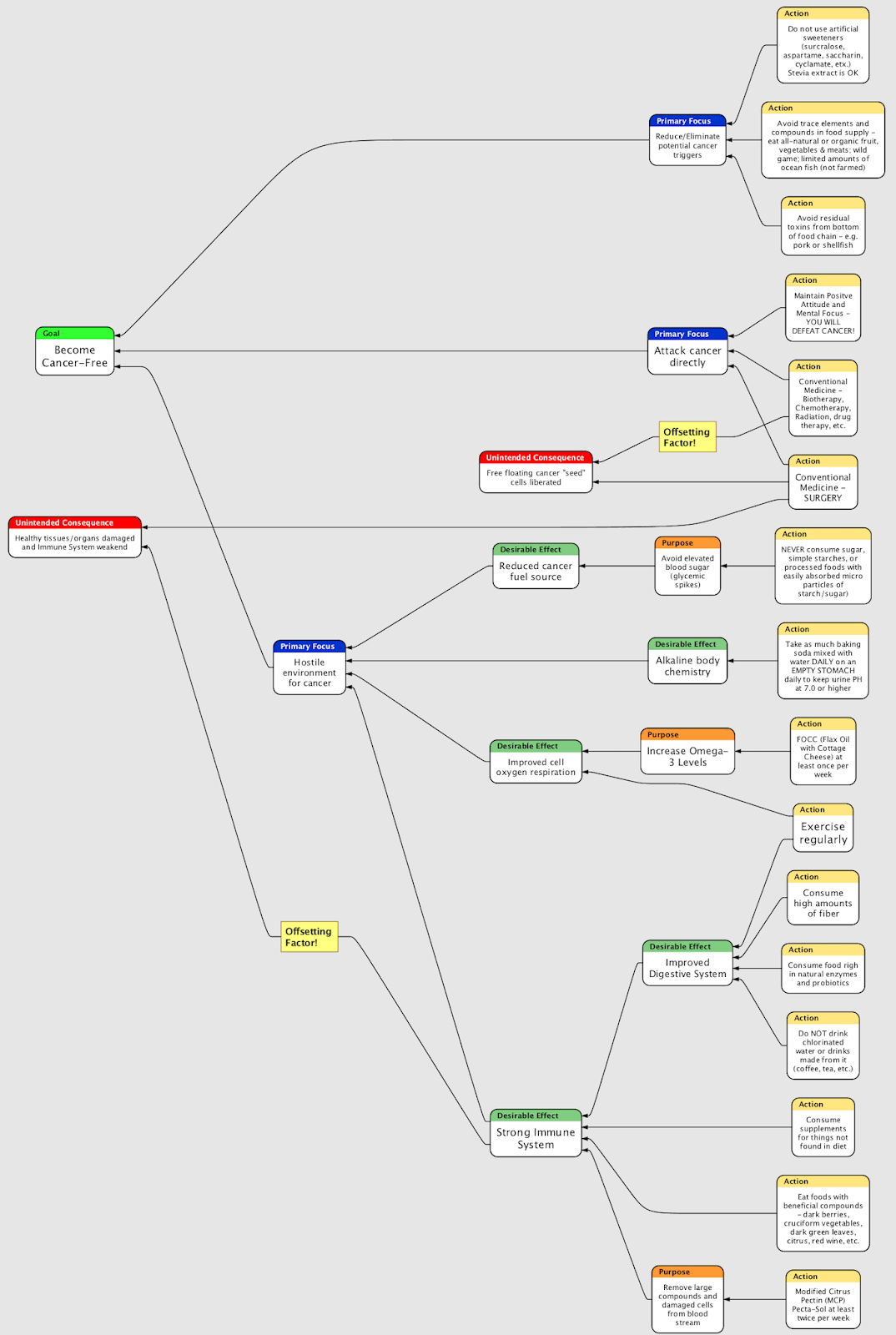
You should all be aware of my approach to diet and cancer - to avoid potential cancer-triggers prevalent in our modern food supply - preservatives, dyes, hormones, residual pesticides, fertilizers and other chemicals, while growing healthy bacteria in the digestive tract to aid in nutrient processing.  Avoid sugar in all forms to keep cancer from being overly well-fed.  Avoid chlorinated water that kills intestinal flora.  Exercise enough to get blood and oxygen flows to healthy levels.  This change involved focusing on organic and all-natural foods, avoiding pork, shellfish, sugars (including fructose), and suffering through 30 min of aerobic exercise three times per week.  The food becomes more expensive, and after a month or so when my system cleaned itself out, much more tasty.  Lots of bottled water - spring water or filtered.  I lost about 25 pounds, but slowly gained about half back.  I was eating better, feeling better, and still overweight.  It was time to try something new.


Like most Americans I have tried many diet programs, and all of them led to success in weight loss - but ONLY for as long as you followed them perfectly.  No matter how long you stayed on the program or how much weight was lost, all the weight returned in a fraction of the time once I took a break from the program.  Why take a break?  Most of these diet gurus talk about a "lifestyle change" where one must follow the rules for a lifetime.  The problem?  No matter what the rules were, they became unsustainable.  Give up bread forever?  I am not even a person that likes bread very much, but after six or eight weeks I would have sold my mother for a crust of stale white, processed bread!  The mind (and perhaps the body) will demand these "off limits" foods, and the rest of the world consumes them daily in your presence.  At some point the mind gives in, and then there is a domino effect - "I just ate X (cookie, bread, pizza, beer, etc.)  so I might as well eat Y (an entire bowl of gravy, the rest of that pecan pie, etc.).  And since I ate all that, may as well eat the next thing, and the next..."  And so it goes and you are "off" the diet.  Even if your willpower is strong, eventually something will trigger this chain - a birthday, holiday, vacation, or whatever.


Formal diet programs address the physical component of reducing weight - limiting or eliminating certain foods that induce weight gain and/or limiting quantities of total intake.  And so they fail entirely to address the mental component of dieting.  For whatever reason (joy, depression, boredom) the mind will DEMAND that you:
A) Eat something forbidden, or
B) Eat all you desire, or
C) Both!


What the world needs is a diet where one can consume what one desires most at any given time in unlimited quantities - now THAT would be a plan that anyone could follow!  Enter Tim Ferriss, the most unlikely of candidates, to provide a potential solution.  For those unfamiliar with Tim, he was a salesman and fitness buff who started his own company selling fitness supplements.  Upon finding the lifestyle of a company owner all-consuming and unrewarding (both emotionally and financially), he decided to extricate himself from his business.  As he carefully removed himself from operation after operation, with the intention of just getting away from it, he found the business becoming more and more efficient and lucrative.  When he had removed himself almost completely, he discovered that the break he needed to take provided the best operating model for himself and the business.  He organized his story into the cleverly (albeit misleadingly) titled "The 4-Hour Workweek," which became a New York Times bestseller.  I have this book, and while it "promises" a low-stress work lifestyle, it is actually an excellent book on time management.  If you only incorporate one or two of Tim's ideas, 4HWW is well worth its purchase price. Financial success from the business and the book led him to re-evaluate his lifestyle, and he decided to pursue having fun as a primary objective.  Ultimately he sold the business for a tidy sum and "retired" in style.  His passion drove him to pursue fitness, fun, and other activities to the fullest.  A year ago he published his second book, a massive tome entitled "The 4-Hour Body."  This second book covers EVERYTHING - Losing weight, gaining weight, bulking up, running faster, holding your breath longer, hitting a baseball, and even "bedroom stuff."  Avoid the audio versions (which are abridged), and also do NOT read the thing cover to cover.  It will kill you!  As advised in chapter one, read the chapter groups that apply to your situation of interest.


Lest one suspect that I am shilling for Mr. Ferriss, the observations are my own, and the links above are NOT affiliate links.  I receive no compensation of any kind for ANY information in this blog.


What Ferriss has done is intuitively obvious in retrospect.  The medical community and the engineering community are mutually exclusive.  One is not both a doctor and an engineer - would require a lifetime of specialized study.  Both of these fields (and many others) mostly ignore each other and fully ignore credible bodies of evidence and research because of their sources.  For instance, body builders who take illegal steroids and experiment on themselves with diets, supplements, and exercise routines, professional wrestlers, and many others who choose to ignore convention and experiment on themselves.  Do Tim and I recommend doing such? Absolutely not.  But there are those who do, and they have collectively developed what could be viewed as a body of data that could be used to assess cause and effect when applied in conjunction with data and techniques from the accepted medical, scientific, and a engineering "gentry."  If one sets aside the source and examines only the data, one can synthesize approaches that otherwise would not present themselves.  Combine that with Tim's willingness to do even extreme experiments on himself, and his association with others who the same, and he delivers a set of very novel solutions.  I set aside my prejudices as I read through sections of the book, and decided to give the weight loss regimen for diet and exercise a six month trial.  Parts of it sound crazy, but rigorous detail and data collection (my passion) would serve to identify adverse effects, should there be any.


The first thing to cover is "Minimum Effective Dose," which is the smallest dose (usually of a pharmaceutical drug) that produces an effect.  If this concept holds true for drugs, would it also hold true for other things like dietary inputs, exercise, sleep, etc.?   Applying the concept to exercise, for instance, I found that I could potentially exercise LESS than I was and get the desired effect.  This, of course, was good news to me, since I DESPISE exercise.  Same applied to diet and environmental factors came up with the food input side.  The next thing to change is WHAT to measure.  Weight, of course!  Well, not so much.  Many factors influence weight, so along with weight measurements (which are not really necessary), we also need to measure our body size.  Men need to take six measurements and total them up.  There is no standard for this total, as if varies widely from person to person.  But changes in this sum represent changes in body size and practical things like what size clothing one will wear.  As such, it is a great measure of success before and after, or even of failure.  The measurements are circumferences of::
Left Bicep
Right Bicep
Waistline at belly button
Hips at widest point
Left Quadricep (halfway between knee and groin)
Right Qudricep
for women - add Bust measurement


Only thing left was to figure out how to deal with the mental side - the insurmountable desire for "cheat" foods and binging.  More on that below. Taken all together, Tim's weight loss plan has a number of elements, sleep, cold therapy, supplements, dietary restrictions, diet "breaks," and even exercise.  We decided to implement the plan rigorously.  I chose to wait until after my March, 2011 cystoscopy to provide motivation to make a change.  It was all clear, and I was happy and ready to take the plunge.  We will break the program summary into three parts: Diet, Exercise, and Break.


Diet - along with supplements and other practical advice (like start every morning with a liter of ICE COLD water and finish breakfast within 60 minutes of arising), Tim recommends a high protein, zero sugar, and low/slow carb diet.  This is like a modified version of the infamous Atkins Diet with a few twists.  There are limits on the amount eaten (4 small meals per day), and dairy (especially cheese) is forbidden, along with all fruits and any high glycemic index carbohydrates.  Protein is emphasized in proportion, not quantity, and high fiber vegetables plus legumes (beans and lentils) for carbs.  This diet is fairly limiting in scope - protein such as meat, fish, eggs, and soy (which I tend to avoid) plus beans, lentils, and vegetables.  No sugars of any type including things like sorbitol or xylitol.  Eliminating dairy eliminates lactose as a sugar source.  The idea is to keep blood sugar at a constant, low level and avoid spikes.  The biggest complaint most people have with the diet is boredom - eating the same things over and over again.  This can be offset to a degree by mixing and matching the simple ingredients and creative use of spices, but even the tiniest of cheats introducing sugar or starch will completely negate the effect.  This is a VERY strict diet, but only for limited time frames.  Read on...


Exercise was consuming 45 minutes three times per week with 20 minutes in the "aerobic zone."   This was well below any recommendation from the fitness community, but enough to satisfy my anti-cancer needs.  Under Tim's plan I reduced this to 12-15 minutes of stretches and crunches three times per week - still not pleasant, but much more palatable, and definitely enough to get my heart pumping by the finish.  In addition to other benefits my slouchy, swayback posture began to improve from this routine.


While this reduced exercise regimen was a positive mental influence to stick with the program, what about the uber-strict diet?  Good news here - you only diet for a total of SIX days per week?  What about Day 7?  One still follows the morning routine including an on-plan high-protein breakfast.  But after that until bedtime (or midnight, whichever comes first) one can have ANYTHING in ANY QUANTITY.  It can be a complete binge day.  No rules.  No limits except the time frame.  This clever interlude addresses a number of issues - the mental desire for "forbidden" foods in forbidden quantities.  Shocking the system from a low-carb regimen into a high carb one.  Keeping the body guessing about whether food is scarce but steady or abundant.  Your body becomes accustomed to low doses of high-protein low carb intake and then gets a massive jolt.  It tends to reject most of it and pass it harmlessly into your toilet, while satisfying the mental needs.  Are you craving some forbidden food?  Max wait is six days, and then you can have all you want of it.  Trust me - you won't be craving much for the first couple of days afterward!
 
Clearly this is insane - eat more, exercise less, binge regularly to lose weight and feel better.  It cannot possibly work.  Several people have flat out told me that this is impossible and CANNOT work, including my doctor, a personal trainer, and assorted other smart people.  I agree.  It can't work.  Except for one thing - it DID work for me.  Measurements don't lie.  See below for tale of the scales and tape:


One good example of the many negative comments is a review on Amazon by N. Watson, a Stanford educated physician and martial arts expert.  He says what the smart people told me.  This can't work and does not work on him.  But he is already thin and fit.  Watson flatly states: "It takes more than 4 hours a month in the gym to have a great body. I'm sorry, it just does."  Well excuse me Dr. Watson, but that's BULLSHIT.  I can factually report that the program worked well for both my wife (who is thin already) and for me.  I have dropped 3 pants sizes, tightened my new, smaller belt 4 notches, have improved posture and attitude, and I feel great.  My wife can document proportionally similar happy results.  All despite eating the better part of a dozen KrispyKreme donuts and half a gallon of whole milk on my first break day.  With similar behaviors on subsequent weeks, which do tend to tone down once the mental pressures reduce due to what I call "satiation therapy."  I am not claiming that I have a great body - yet.  But I can see that it is easily achievable given time and faithful adherence to the program.  I am not thin by any means, but so significantly thinner than a year ago that people notice. 
 
NOTE: The diet is for folks who do NOT have active cancer, so the "cheat day" does not feed the cancer directly with a bath of nutrients!


You will note the graph stops in October.  What after that?  I continued to lose weight and inches until Thankgsgiving - which became a 6 day binge.  Bad form.  Back on the wagon until Christmas.  To this point weight went up slightly and inches stayed flat.  But the Christmas break and 15 continuous binge days (not just normal cheating, but big time binging) was able to turn the inches line up.  The belt had to loosen a notch, and pants (still 3 sizes smaller) became tight.  But after 2 weeks back on the program the belt notch has been regained and the inches have leveled off.  I am aiming to lose two more sizes and expect weight to level out around 180 pounds.  And I feel great, as opposed to feeling like crap for most of the break.

For more details I will let you read the 4HB book.  If you buy it used and get a first release, make sure to obtain and incorporate the errata sheet.  Scroll down the page until you find the header 4HB Corrections and Typos.  If you like the book, there is even more stuff that did not make the cut- CLICK HERE.  The book is jam packed with information, and the chapters on sexual performance are right in the middle, so it is near certainty that, if you hand the book to someone, they will open to the middle and see VERY graphic diagrams (not photos) and text.  You have been warned!

There are tons of websites out there from folks who have tried this with varying amounts of success.  One of the most helpful I found is by Luke and Kat, the "Four Hour Body Couple."  He was fit and she was struggling, and both are doing well on the program.  Their website is free and full of good tips and advice from people who have lived it.  It serves as a gateway to advertise Kat's music - she is a Jazz torch singer. 

Here is a listing of the chapters and section headers in the book, which is enormous:
FUNDAMENTALS—FIRST AND FOREMOST 
Rules That Change Rules: Everything Popular Is Wrong 
GROUND ZERO—GETTING STARTED AND SWARAJ 
The Harajuku Moment: The Decision to Become a Complete Human 
Elusive Bodyfat: Where Are You Really? 
From Photos To Fear: Making Failure Impossible 
SUBTRACTING FAT 
The Slow-Carb Diet I: How to Lose 20 Pounds in 30 Days Without Exercise 
Damage Control: Preventing Fat Gain When You Binge 
The Four Horseman of Fat-Loss: PAGG 
Ice Age: Mastering Temperature to Manipulate Weight 
The Glucose Switch: Beautiful Number 100
The Last Mile: Losing the Final 5–10 Pounds 
ADDING MUSCLE 
Building The Perfect Posterior (Or Losing 100+ Pounds) 
Six-Minute Abs: Two Exercises That Actually Work 
From Geek To Freak: How to Gain 34 Pounds in 28 Days 
Occam’s Protocol I: A Minimalist Approach to Mass
IMPROVING SEX 
The 15-Minute Female Orgasm: Part Un 
The 15-Minute Female Orgasm: Part Deux 
Sex Machine I: Adventures in Tripling Testosterone 
Happy Endings and Doubling Sperm Count 
PERFECTING SLEEP 
Engineering The Perfect Night’s Sleep 
Becoming Uberman: Sleeping Less with Polyphasic Sleep 
REVERSING INJURIES 
Reversing “Permanent” Injuries 
How To Pay For A Beach Vacation With One Hospital Visit 
Pre-Hab: Injury-Proofing the Body 
RUNNING FASTER AND FARTHER 
Hacking The NFL Combine I: Preliminaries—Jumping Higher 
Hacking The NFL Combine II: Running Faster 
Ultra-Endurance: Going from 5K to 50K in 12 Weeks—Phase II 
GETTING STRONGER 
Effortless Superhuman: Breaking World Records with Barry Ross 
Eating The Elephant: How To Add 100 Pounds To Your Bench Press 
FROM SWIMMING TO SWINGING 
How I Learned To Swim Effortlessly In 10 Days 
The Architecture Of Babe Ruth 
How To Hold Your Breath Longer Than Houdini 
ON LONGER AND BETTER LIFE 
Living Forever: Vaccines, Bleeding, and Other Fun 
APPENDICES AND EXTRAS 
The Value Of Self-Experimentation 
Spotting Bad Science 101: How Not to Trick Yourself 
The Meatless Machine II: A 28-Day Experiment